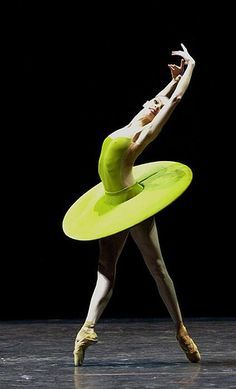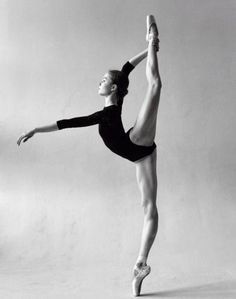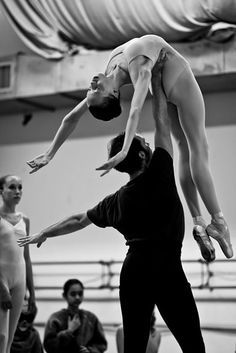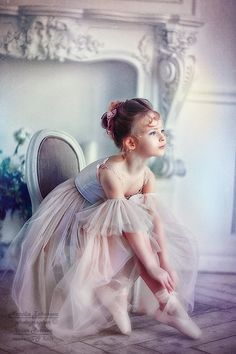


In every dance group, sooner or later the same question arises: why do some children “burn” with passion for dance, while others gradually lose interest?
Motivation is not only about the desire to train. It is about inner meaning, about responsibility, and about the quality of the environment created by the coach. In every group, sooner or later the question appears again: why do some children stay deeply engaged in dance, while others slowly drift away?
Let us try to look at this without extremes — from the perspective of practical experience and common sense.
When Support Helps and When It Weakens
There is a belief that the more comfortable conditions a coach creates, the lower a dancer’s motivation may become. This is partly true — but only when support turns into overprotection.
A strong environment means structure, expectations and safety. A weak environment appears when others “dance for the child,” explain instead of them, justify them instead of them, and take responsibility instead of them.
The key principle is simple:
- support should leave space for effort;
- when effort disappears, internal motivation disappears as well.
Signs of Decreasing Motivation: Not a Verdict but a Signal
Slow or weak movements, lateness, distraction, lack of questions — these can be signals of decreasing motivation. But they are not an automatic diagnosis.
The reasons may include:
- fatigue or overload;
- age-related changes;
- conflicts within a pair or a group;
- external pressure (for example, parental initiative).
Therefore, before trying to “increase motivation,” it is worth asking a simple question: what exactly is preventing this child from engaging right now?
Sometimes the problem is not unwillingness but fear of making mistakes. Sometimes it is unrealistic expectations. Sometimes the inner meaning has simply not formed yet.
When Dance Is Not the Child’s Choice
There are situations when a child practices dance not because of their own desire. In such cases the coach faces a difficult choice.
Two scenarios are possible:
- Try to transform external motivation into internal motivation through engaging tasks, small personal victories and integration into the group.
- Acknowledge that the direction may not be suitable — and help parents recognize this.
Humanity here is no less important than results. Retaining a child at any cost is not always the right long-term strategy.
Undeserved Victories as a Hidden Demotivating Factor
An honest result is one of the foundations of long-term motivation.
When a dancer receives first place not entirely as the result of their own effort, but due to external factors — for example a weak level of competition, the jury’s wish to support a promising child, a pedagogical decision to “give a credit of trust,” or general loyalty toward a particular group — a subtle but important gap can arise between effort and result.
This does not mean that the jury is “wrong” or that the award has no value. Often such decisions are made with good intentions: to motivate, highlight potential, or support a child at the beginning.
The risk appears when the child (or parents) begin to interpret the award as proof that “this is already enough,” and effort stops growing. Motivation then becomes dependent on external validation, and when real competition appears, sharp disappointment may follow.
A practical conclusion for coaches: after any victory it is important to acknowledge not only the joy but also the specifics — what exactly worked today, what raised the level, and what the next step of development will be. This connects the result to effort and preserves healthy motivation.
Personal Responsibility as the Basis of Motivation
One of the strongest tools a coach has is returning the student to personal responsibility.
Not accusations. Not pressure. But questions.
- What are you doing well right now?
- What exactly do you want to improve?
- What task are you solving at this moment?
- What did you notice in your performance on video?
Such questions form an inner position of maturity. Responsibility stops being punishment — it becomes a resource.
It is also important that responsibility is distributed fairly. If in a group “one person is always to blame,” others quickly learn to shift responsibility onto circumstances.
The Coach as a Source of Influence
The motivation of a group always resonates with the state of the coach.
If the coach:
- avoids difficult decisions;
- shifts blame to external circumstances;
- doubts their own competence,
— dancers inevitably sense it.
Conversely, if a coach demonstrates calm firmness, respect for themselves and for their students, and a willingness to acknowledge mistakes and move forward, this creates a healthy environment.
The coach’s personal motivation cannot replace the student’s motivation. But it can either create or destroy the space in which it develops.
How to Test the Effectiveness of These Approaches in Practice
To avoid remaining only within theory, a simple three-level evaluation model can be applied.
Short self-reflection after each class. After every training session participants answer three questions:
- What worked well for me today?
- What still needs improvement?
- What one task will I focus on for the next training?
Monitoring behavioral indicators over three months:
- attendance;
- level of initiative;
- number of clarifying questions;
- willingness to take responsibility in a pair.
Comparison of teaching approaches. One part of the group works in a more directive format, while the other focuses on autonomy and reflective questions.
After several months it becomes clear where stronger internal motivation develops.
Conclusion
Motivation in choreography is not born from praise, gifts or even victories. It emerges at the intersection of three factors:
- honest results;
- personal responsibility;
- a healthy, structured environment.
When a child feels that growth comes from their own effort, a genuine desire to dance appears. And that is a far stronger foundation than any trophy.