

This material outlines one possible way to structure a body-focused training class. In real practice, every teacher adapts the structure depending on the children’s age, their level, and the specific goals of the lesson.
The exercises and approach described here work best with children around 7–8 years old, when basic body awareness is already developing and they can begin to control movement more consciously. With younger groups, most elements should be adapted into a more playful format.
It’s also important to keep in mind that this kind of conditioning is not the only way to build technique. It’s simply one effective tool that works best when combined with movement experience, musicality, and working in space.
For example, floor work can really help children feel their muscles better and reduce unnecessary compensations. At the same time, for some children, the “right” movement only appears once they start moving dynamically. That’s why it’s worth combining both approaches.
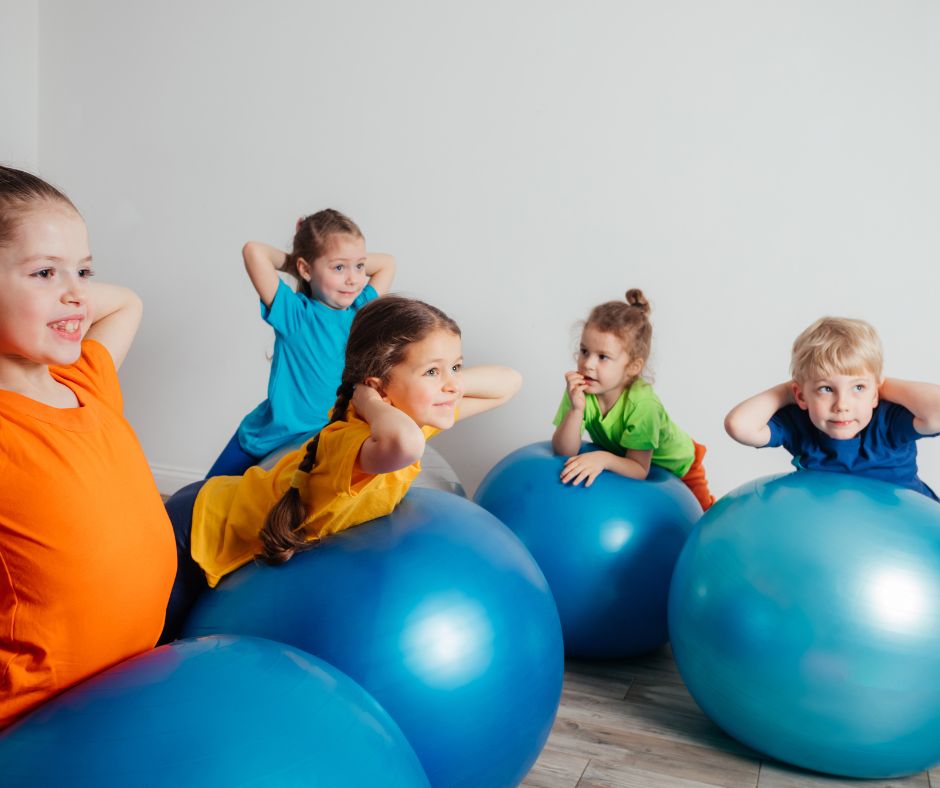
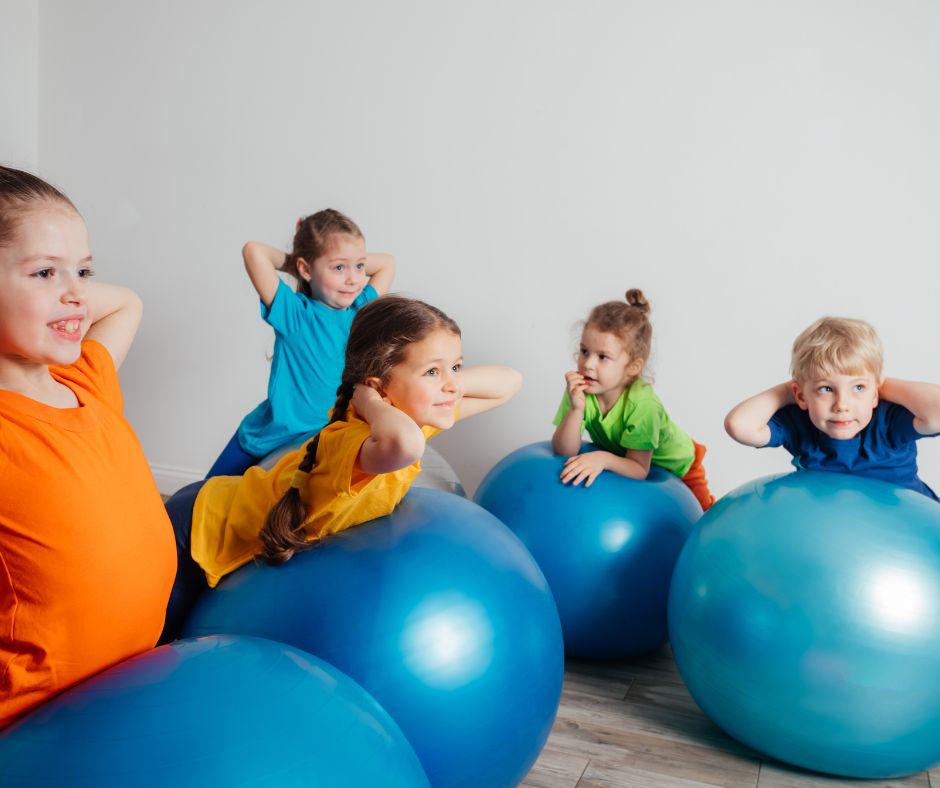
The same applies to unstable surfaces like a fitball. They’re great for activating deeper muscles and improving stability, but they need to be used carefully and only when there’s already some basic body control, so that technique doesn’t get lost.
Overall, this material can be especially helpful for younger teachers as a starting point — something they can later adapt to their own method, their group, and their personal way of working with the body.
So, let’s take a closer look.
Anatomical training: building strength, control, and clean movement
Many classes end up looking the same: children work hard, repeat exercises, try their best — but a month later, the feet are still the same, the knees are still unstable, and the back hasn’t really changed. At some point, it’s important to say it honestly: it’s not about effort. The body simply isn’t ready yet.
This kind of training is not just an “extra block” in the lesson. It’s the foundation everything else is built on — technique, jumps, turns, and movement in general.
A complete structure for a ballet conditioning class
A good class always has a clear logic: wake the body up, activate the right muscles, build control, and then bring it into movement.
Start with activation. About 5–7 minutes of calm, focused work to wake up the joints and signal to the body that it’s time to start. Gentle ankle circles, soft knee work, light pelvic movement — no rushing, no forcing.
Then move to the core. This is where real control is built. Plank (with proper form, not just “holding on”), coordination work like dead bug, and controlled upper body lifts with a neutral spine. It’s not the most popular part for kids, but it’s the one that makes the biggest difference.
Next comes the feet and legs. Slow relevés through every phase, controlled foot rolls, and keeping the knee aligned over the foot. This is where stability and jump quality are built.
Then floor work. Working lying down or sitting helps remove compensations and allows children to feel the movement more clearly. Battements, hip work, isolations — done calmly and with awareness.
Finish with integration. A short combination of 2–3 movements, first done slowly, then a bit faster. This is where everything starts to come together.
Why French floor work is a must for every teacher
Floor work is often seen as stretching or something “easier”. In reality, it’s one of the most powerful tools you have.
French floor work is about control, not flexibility. It shows how the body actually works, without the possibility of hiding behind a nice standing shape.
This is where you see if turnout is real, if the pelvis is controlled, if the right muscles are working. If something doesn’t work lying down, it won’t be clean standing up either.
It’s not about simplifying. It’s about refining the movement.
The foot and ankle: the real secret of strong legs
A very common mistake is focusing on the legs and almost ignoring the feet. The result is strength without support.
The foot is your foundation. If it’s unstable, everything else follows — knees, balance, jumps.
What actually works:
- Slow, controlled relevés — no pushing, no dropping, just control through every phase.
- Picking up a towel with the toes — simple, but very effective for activating deeper muscles.
- Balancing on one leg, especially with eyes closed — this builds real control.
Strong feet are not just about aesthetics. They’re about safety and stability.
Floor class: exercises that actually make a difference
Some exercises truly change the body, others just create the feeling of working. Here, quality matters more than quantity.
- Battement lying on the back builds leg control without relying on the torso.
- Hip opening work develops real turnout, not just the appearance of it.
- The “frog” only works if it’s active, not passive.
- Pelvic lifts activate the back line, which is often underused.
- Isolations help separate movements and make them cleaner.
If a child can’t do an exercise slowly and consciously, that’s exactly where the work needs to happen.
Fitball: what it is and how to use it
A fitball is a large exercise ball that creates an unstable surface. That instability is exactly what makes it useful.
It forces the body to activate deep muscles that are often not engaged.
Simple exercises that work well:
- Plank with the legs on the ball — immediately shows who has control and who doesn’t.
- Rolling over the ball — works the back and balance.
- Pelvic lifts with the feet on the ball — great for the back of the legs and overall stability.
A fitball isn’t just for variety. It’s a tool to make the body more organized and stable.
This type of training is not a separate direction or an add-on. It’s the foundation everything else depends on.
When the body works properly, movement becomes easier, cleaner, and more confident. And that’s when you start seeing real results — not after months, but already in the process.